Fact-Checking Assist in AI Hallucination Detection
Artificial intelligence has become an essential tool for generating text, making predictions, and assisting with decision-making across various industries. However, one of the biggest challenges AI faces is hallucination, where it produces incorrect, misleading, or completely fabricated information. Since AI models do not inherently understand truth the way humans do, they sometimes generate responses that appear plausible but lack factual accuracy. To mitigate this issue, fact-checking plays a crucial role in detecting and correcting AI hallucinations, ensuring that AI-generated content remains reliable and trustworthy.
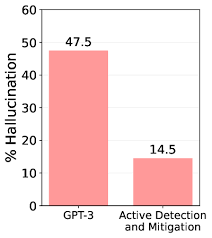
Fact-checking assists in Al hallucination detection and accuracy improvement by verifying the accuracy of AI-generated information against credible sources. Since AI models generate text based on statistical patterns rather than actual comprehension, they may confidently present incorrect facts. Fact-checking tools compare AI outputs with authoritative databases, news archives, academic papers, and verified online sources to determine whether the information is correct. If discrepancies are found, AI-generated content can be flagged for review, preventing the spread of misinformation.
One of the most effective ways fact-checking helps in hallucination detection is by using automated verification systems. Various fact-checking algorithms and tools, such as Google’s Fact Check Explorer and Full Fact’s AI-powered verification, scan AI-generated content for inaccuracies. These systems analyze claims, cross-reference them with reputable sources, and assess whether the information aligns with established facts. By integrating such tools into AI models, developers can reduce the risk of hallucinations by filtering out unreliable responses before they reach users.
How Does Fact-Checking Assist in AI Hallucination Detection?
Another way fact-checking improves AI reliability is through real-time data validation. AI models are trained on vast datasets, but their knowledge is limited to the information available at the time of training. As new information emerges, AI-generated content may become outdated or inaccurate. Fact-checking tools that access live databases and updated sources can verify whether an AI model’s response is still valid or if it requires correction. This approach is particularly important in fast-changing fields such as news, finance, and medicine, where misinformation can have significant consequences.
Fact-checking also enhances AI hallucination detection by promoting transparency in AI responses. When AI models provide information, fact-checking systems can highlight verified claims while flagging unverified or potentially incorrect statements. Some AI systems are designed to cite sources along with their responses, allowing users to verify the accuracy of the content themselves. By providing citations and references, AI-generated content becomes more trustworthy, and users can distinguish between reliable and potentially hallucinated information.
While fact-checking is a powerful tool for detecting AI hallucinations, it is not a standalone solution. AI-generated content should still be reviewed by human experts, especially in critical areas such as law, healthcare, and academia. Fact-checking works best when combined with other techniques like confidence scoring, external validation, and human oversight. By integrating fact-checking mechanisms into AI systems, developers can significantly reduce hallucinations, ensuring that AI-generated information is not only fluent and engaging but also accurate and reliable.