Piano Transcriptions
Piano transcription is the process of notating a piece of music for keyboard instruments instead of those for which it was originally written. In this way, musicians who play the piano can perform works that would otherwise be impossible to play on the instrument. Piano transcriptions can be created for many different types of compositions, such as classical, jazz, or contemporary music. In addition, they can be used to prepare an orchestral work for performance by reducing the number of parts played at once to what can easily be performed on a piano.
When it comes to practicing transcription, the most important thing is to listen to the musical passage over and over again until you know exactly what notes are being played. This can take a while, but will ensure that you don’t miss any notes or get them confused with other musical phrases. Once you have the entire passage in your mind, you can then begin to transcribe it. Generally, it’s a good idea to start with a simple musical passage that you are already familiar with. This will help you develop your transcription skills and will allow you to focus on the musical elements that are most important in transcribing music.
During the Classical period, piano pieces became very popular. As a result, a large literature has sprung up of transcriptions and arrangements made for this type of music. Piano reductions (also known as piano scores) have been created for orchestral works, choral music, and chamber music ensembles. They reduce the number of orchestral or choral parts to what can be played on a single keyboard.
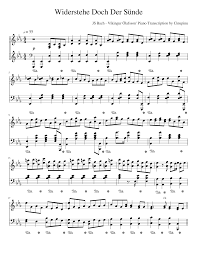
Types of Piano Transcriptions
Another common practice is to adapt a piano composition to a different key. This forces a musician to think of the musical material in relation to the key, and can really help them understand how a piece of music works in its original form. For example, a pianist who learns to transcribe the same musical passage in every key will be able to understand how the music changes and feels in each key.
In some cases, the composers of a piece of music also write their own piano transcriptions. This can be a great way to further explore the musical ideas behind the piece, and it is also helpful for other musicians who may wish to play a particular work on piano. For example, an orchestral conductor might make a piano transcription of the score for his own rehearsals, or an organist might transcribe an orchestral piece to use with his congregation at church.
Many of today’s most prominent pianists are avid advocates of the piano transcription. For example, on his recent Nonesuch album, Jeremy Denk took listeners on a seven-century survey of medieval and Renaissance vocal music through his transcriptions for piano of works by Machaut, Ockeghem, Josquin, and other early composers. He has long believed that the piano’s ability to capture the voices and timbres of other instruments makes it particularly well-suited to this kind of historical music.