role of polyimide in flexible printed circuit manufacturing
Polyimide plays a crucial role in the manufacturing of Flexible Printed Circuits (FPCs), serving as the primary substrate material for most flexible circuits. This high-performance polymer is favored for its unique combination of excellent mechanical properties, thermal stability, and electrical insulation characteristics, making it an ideal choice for applications that require flexibility, durability, and resistance to harsh environmental conditions. In the context of FPC manufacturing, polyimide provides the essential foundation upon which the circuit traces are built, contributing to both the functionality and reliability of the final product.
One of the most important attributes of polyimide is its flexibility. flexible printed circuit manufacturers are designed to bend, twist, and flex without losing functionality, which is especially critical in industries such as consumer electronics, automotive, aerospace, and medical devices. Polyimide, when used as the substrate for FPCs, allows these circuits to conform to complex shapes while maintaining the integrity of the electrical traces. Unlike traditional rigid circuit boards, which cannot bend or fold without cracking, polyimide-based flexible circuits can withstand repeated bending and movement, making them ideal for applications where space constraints and dynamic movement are factors.
Another essential property of polyimide is its thermal stability. Polyimide can endure a wide range of temperatures, from low temperatures to high temperatures up to 300°C or higher, depending on the specific grade of polyimide used. This thermal resistance is vital for FPCs used in electronics exposed to extreme heat, such as those found in automotive or aerospace applications. The ability of polyimide to maintain its physical and electrical properties under such conditions ensures that flexible printed circuits can function reliably in high-temperature environments, where other materials might degrade or fail. Additionally, the low coefficient of thermal expansion (CTE) of polyimide helps prevent thermal stress-related issues during thermal cycling, which could otherwise lead to the delamination of the circuit or cracking of traces.
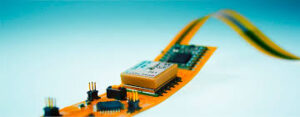
What is the role of polyimide in flexible printed circuit manufacturing?
Polyimide also provides superior electrical insulation, which is crucial for ensuring that the electrical signals transmitted through the traces of the FPC are not disrupted or interfered with. In FPCs, where multiple layers of conductive traces are often packed closely together, electrical insulation prevents short circuits and cross-talk between layers. Polyimide’s excellent insulating properties allow manufacturers to design FPCs with high-density wiring, improving the circuit’s performance without compromising electrical safety.
Moreover, polyimide is inherently resistant to moisture and chemicals, which enhances the longevity and reliability of flexible printed circuits in harsh environments. FPCs exposed to moisture can experience issues such as corrosion or short circuits, but polyimide’s resistance to water absorption helps mitigate these risks. In industries such as medical devices or industrial machinery, where exposure to fluids, oils, or chemicals is common, polyimide offers additional protection against potential damage caused by such substances. Its chemical resistance ensures that the substrate will not degrade or lose its flexibility when in contact with a range of potentially harmful chemicals, thus extending the life cycle of the FPC.
Polyimide’s lightweight nature is another significant benefit in FPC manufacturing. As electronic devices continue to become smaller and more portable, the need for lightweight components increases. Polyimide is an ideal material for FPCs because it helps reduce the overall weight of the circuit without compromising performance or durability. This characteristic is especially valuable in industries like aerospace and automotive, where reducing the weight of electronic components can have significant benefits in terms of energy efficiency and performance.
The versatility of polyimide also makes it suitable for a variety of FPC applications. It can be processed into thin, flexible sheets, which can then be laminated with copper foil to create the conductive traces needed for the circuit. Polyimide can also be modified or enhanced to meet specific performance needs by incorporating additives or coatings, which further increases its applicability across different industries. For example, polyimide can be coated with a conductive or anti-static layer to address specific requirements, such as electrostatic discharge (ESD) protection, or it can be treated with an adhesive layer for easier bonding to other substrates or components.
In conclusion, polyimide is a key material in the manufacturing of flexible printed circuits, offering exceptional flexibility, thermal stability, electrical insulation, chemical resistance, and lightweight properties. Its ability to withstand harsh conditions while maintaining performance makes it indispensable for a wide range of applications, from consumer electronics to aerospace and medical devices. As the demand for smaller, more efficient, and more durable electronics continues to rise, the role of polyimide in FPC manufacturing will remain essential, enabling the development of advanced, high-performance circuits that meet the challenges of modern technology.